

Antistress - relaxation toys
JindoBlu
Some mobile games ask for concentration, quick reactions, or a long-term goal. Antistress - relaxation toys takes a different route: it gives me a collection of small, tactile activities for the moments when I want to occupy my hands without committing to a serious game. I use it when I am waiting, winding down, or feeling mentally overloaded and do not want another demanding task.
Developed by JindoBlu, this free puzzle game has built a remarkably large audience, with over 100 million installs and a 4.7 average from around 955 thousand ratings. Those figures make sense once you understand its appeal. It is not trying to tell a story or test my intelligence with increasingly difficult levels. Instead, it turns familiar little actions into simple digital toys that I can open, try for a few seconds, and put away whenever I like.
That simplicity is both its strongest quality and its main limitation. I would recommend it to someone looking for a casual way to pass short gaps in the day, but not to anyone expecting a deep puzzle campaign, a competitive score chase, or a replacement for a proper mindfulness app. The experience is best understood as a pocketful of low-pressure distractions.
What the current version feels like to use
The current version is 10.12.2, and the overall experience remains focused on immediate access rather than progression. I can launch the game, choose an activity, interact with it for as long as I want, and leave without worrying about losing a life, missing a daily objective, or falling behind. That makes it unusually friendly for irregular play.
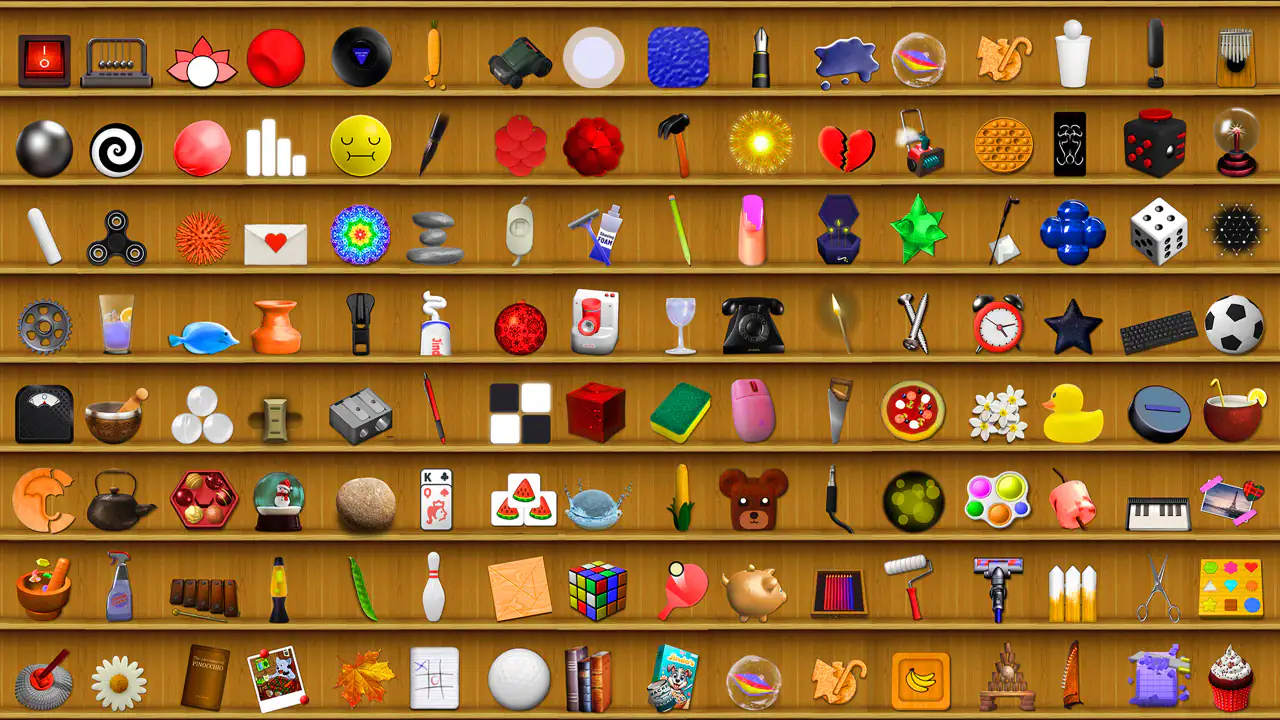
The activities are built around recognizable sensations and motions. Instead of asking me to solve a conventional board, the game invites me to perform small repetitive actions that feel familiar: tapping, sliding, switching, pressing, or manipulating objects on screen. The pleasure comes from the interaction itself. A few of these toys can be satisfying because they respond in a direct, almost mechanical way, while others work better as background distractions than as games I would actively seek out.
Related News

Why WhatsApp Messenger Still Makes Everyday Communication Feel Easy

Jurassic World: The Game Is the Better Dino Tycoon for Strategic Players

Threads in Real Life: Who Should Join, Lurk, or Leave

How SHEIN Turned Shopping Into an Endless Content Feed

How to Make Fortnite Feel Smarter on Mobile

Should You Switch to Microsoft Outlook on Mobile?
I found the lack of pressure especially useful. Many puzzle games quietly create urgency through timers, limited attempts, energy systems, or increasingly elaborate objectives. Here, the central promise is more modest. I can choose something that matches my mood, spend a short while with it, and stop without penalty. The best feature is the freedom to play without needing to “win”.
That does not mean every activity will feel relaxing to every person. Repetition can calm one player and irritate another. If I am already impatient, a slow toy may feel pointless rather than soothing. The collection works because it offers variety, not because every item has the same effect. I tend to skip the ones that feel too passive and return to the interactions that give me a clear response to each touch.
Why the puzzle label is slightly misleading
Calling this a puzzle game is accurate in a broad catalog sense, but it does not behave like a typical logic title. I am not planning several moves ahead or learning a complex ruleset. The challenge, where it exists, is usually light and self-contained. The game is closer to an interactive toy box than to a traditional puzzle adventure.
Gallery
That distinction matters when deciding whether to install it. Someone who enjoys arranging pieces, discovering solutions, and gradually mastering difficult stages may find the experience too shallow. On the other hand, a person who wants something to do with one hand while waiting for an appointment may appreciate that it does not demand full attention.
I also like that the short sessions make it easy to fit around ordinary routines. I can open it during a short queue, play briefly after putting my phone down from work, or use one activity as a transition before sleep. I would not describe it as a guaranteed sleep aid, since bright screens and interactive tapping affect people differently, but its lack of competition makes it gentler than many action-oriented games.
How the collection works in everyday situations
A realistic use case is a delayed train or doctor’s appointment. Instead of opening a social feed and getting pulled into an endless stream of arguments, headlines, and videos, I can spend a few minutes with one of the toys. There is no need to remember a storyline when I return, and I do not have to protect a streak. That makes the game useful as a controlled interruption rather than another source of information.
It can also work during a work break, but I would use it carefully. A quick, tactile activity can help me change mental gears, yet a long session may simply become another form of screen time. My practical approach is to choose one toy before opening the app and stop when the break is over. The absence of a forced objective makes that easy, although it also means the game will not remind me to leave.
For children, the Everyone content rating makes the game broadly accessible, but “appropriate for everyone” does not automatically mean it suits every family’s screen-time rules. The simple interactions are easy to understand, though younger players may still need guidance around in-app purchases. I would let a child explore it only with the device’s purchase protections configured properly.
What has changed and what that means for players
The game was released on November 8, 2016, so it has had time to establish its identity rather than appearing as a brand-new experiment. The current version number shows that JindoBlu has continued maintaining the product over time. I see that evolution less as a complete reinvention and more as continued support for the original idea: a broad set of small relaxation-oriented interactions in one app.
For a long-term user, that continuity is valuable. The game does not appear to be chasing every trend in mobile gaming or turning its basic concept into a complicated progression system. Someone who liked the straightforward toy-box approach earlier can return without needing to relearn an entirely different product. At the same time, a version update by itself does not guarantee that every favorite activity will feel new, so returning players should expect refinement and maintenance rather than a wholly different game.
New users benefit from the maturity of the app. A large install base and a substantial review history suggest that it has remained visible and usable across many years, while the current release gives Android users a clear point of reference. The minimum requirement of Android 6.0 also makes it accessible on a wide range of older devices, although the experience will naturally depend on the phone’s screen, touch response, and general condition.
One practical effect of that long life is that the app feels designed around quick discovery. I do not need to study instructions before trying an activity. I can test one, decide whether its response feels satisfying, and move on. That low learning cost is a genuine advantage over puzzle games that spend their opening minutes teaching systems, currencies, or layered objectives.
Existing users should also understand what the game is not becoming. Its appeal is not based on a large narrative, a competitive community, or a dramatic sense of achievement. If I return after a long absence, I am looking for familiar comfort and a few interactions that suit my mood, not a major account-based journey. That makes it dependable for casual use but less exciting for players who need regular novelty.
Free access and the purchase decision
The game is free to download, which makes trying it straightforward. In-app purchases range from $0.99 to $10.99 per item. I would treat those purchases as optional convenience or support rather than something required to understand the basic concept. The important question is not whether the game can be opened without paying, but whether the free experience gives me enough variety to justify keeping it installed.
My advice is to use it naturally for several short sessions before buying anything. If the interactions already help you relax, then a purchase may feel worthwhile. If you are bored after exploring the collection, spending money is unlikely to solve the deeper problem: this is a deliberately simple game, not a locked premium puzzle campaign waiting to reveal itself.
Parents and anyone sharing a device should check the purchase settings before handing over the phone. The price range is clear enough to understand, but accidental taps are still possible in any app with optional transactions. I would also avoid buying simply because a particular toy is temporarily appealing; the value comes from repeated use across the collection, and that depends heavily on personal taste.
Where it still falls short
The biggest gap is depth. I can enjoy a small interaction for a while, but there is little reason to master it in the way I would master a difficult logic puzzle. Once the novelty of a toy wears off, the experience may become repetitive. This is not a flaw against the app’s stated purpose, but it is a real limitation for anyone who wants lasting challenge.
Another weakness is that relaxation is subjective. Some activities may feel calming because they are predictable, while others may encourage mindless tapping without actually helping me feel better. I would not use this as a substitute for professional mental-health support, structured meditation, or a carefully designed breathing tool. It is a casual distraction with a soothing intention, not a treatment or a diagnostic product.
The game can also be a poor choice when I need to reduce phone use altogether. Because the activities are easy to start and stop, they are less sticky than social media, but they are still on a screen. If my goal is to rest my eyes, settle before bed, or break a phone habit, a physical fidget object, a walk, music, or a paper puzzle may be more appropriate.
Compared with conventional puzzle alternatives, it trades achievement for immediacy. A sudoku app, match-three game, or word puzzle usually gives me clearer goals and a stronger sense of progress. Those options are better when I want to exercise a specific skill or feel that I accomplished something. This game is better when I do not want a result at all and only need a small, responsive activity.
Who should try it, and who should skip it
I think it is a good fit for people who enjoy tactile phone interactions, need a low-commitment time filler, or find repetitive actions comforting. It is also useful for players who dislike losing progress because they can leave whenever they want. The Everyone rating makes it broadly approachable, and the low minimum operating-system requirement helps people using older Android phones consider it without needing a recent device.
I would skip it if you are looking for a story, multiplayer competition, detailed customization, or a clear long-term objective. I would also choose a more focused app if your main goal is guided relaxation, breathing practice, sleep preparation, or stress management with measurable routines. The game may complement those habits, but it does not replace them.
My most useful tip is to treat the collection like a menu rather than trying to play everything. Notice which interactions leave you feeling calmer and which ones make you more restless. Keep the former for waiting rooms or short breaks, and avoid opening the app automatically whenever you are bored. That small distinction helps the game remain a tool instead of becoming another reflexive screen habit.
What I would watch going forward
For future updates, I would pay attention to whether JindoBlu preserves the quick, uncomplicated character that makes the game approachable. More content can be welcome, but a larger collection is not automatically better if finding a comfortable activity becomes slower or more cluttered. The strongest direction would be improvements that make discovery easier without turning the experience into a progression-heavy game.
I would also watch how the current version affects returning players. Long-term users need enough freshness to justify reopening the app, while newcomers need an immediately understandable starting point. Balancing those needs is difficult: adding too much can weaken the calm simplicity, while adding too little can make the collection feel static.
For now, the product’s identity is clear. It is a free puzzle-category game from JindoBlu built around small digital toys, short sessions, and low pressure. Its broad adoption and 4.7 average rating show that the idea connects with many people, but personal response matters more than popularity here because relaxation is not universal.
After using it, I see it as a useful little companion rather than a game I would play for hours. I recommend installing it if you want a harmless, immediate distraction and are comfortable with optional purchases. Just keep your expectations realistic: this is a pocket toy box, not a deep puzzle journey. When I need a few quiet minutes and do not want to think too hard, it does its job well; when I want challenge, progress, or genuine offline rest, I reach for something else.
FAQs for Antistress - relaxation toys
What features does Antistress - relaxation toys offer?
Antistress - relaxation toys provides a wide range of interactive relaxation toys designed to help users unwind and de-stress. The app includes activities like fidget spinners, sand drawing, and wood carving, among others. Each toy is crafted to simulate real-life sensations, offering a calming experience through tactile interaction and soothing visuals.
Is Antistress - relaxation toys suitable for all age groups?
Yes, Antistress - relaxation toys is designed to be suitable for users of all age groups. Its simple interface and gentle activities make it accessible for children, while the variety of toys and calming effects also appeal to adults seeking stress relief. Always ensure children use the app under supervision.
Does Antistress - relaxation toys require an internet connection?
No, Antistress - relaxation toys does not require a constant internet connection to function. Users can enjoy most of the relaxation toys offline, making it a convenient option for stress relief on-the-go. However, initial download and updates may require an internet connection.
Are there any in-app purchases or ads in Antistress - relaxation toys?
Antistress - relaxation toys is generally free to download, but it may contain in-app purchases that unlock additional toys or features. Some versions might also include ads, but these are typically non-intrusive. Always check the app's store page for details on purchasing options and ads.
Can Antistress - relaxation toys help with anxiety or stress management?
While Antistress - relaxation toys is not a substitute for professional therapy, it can be a helpful tool for managing mild stress and anxiety. The app provides users with calming activities that can help distract from stressful thoughts and promote relaxation, contributing to a more balanced emotional state.
Pros
- Offers a wide variety of soothing activities.
- Simple interface
- easy to navigate.
- No ads interrupting the experience.
- Great for quick relaxation sessions.
- Includes daily calming exercises.
Cons
- Limited customization of toys.
- Some features require in-app purchases.
- Graphics are basic and unsophisticated.
- May become repetitive over time.
- Lacks multiplayer or social elements.


